
Short-selling bots for a falling market
In a bear market, buy low, sell high gets you wrecked; the play flips to sell high, buy back lower. The traders who did best last cycle didn't call the bottom. They ran automated strategies that kept executing while everyone else froze.

3Commas automates this on your connected exchange account. SmartCover sells your position at market as the price drops, then buys back lower automatically. Pair it with the Smart Trade terminal to set take-profit and stop-loss together, so a sudden spike can't run away with the position.
- Where it works: a steady downtrend with clear lower highs.
- Where it fails: a sharp relief rally that hits your stop before the move plays out.
- What it needs: a centralized exchange account; 3Commas connects to 20+ by API (Binance, Bybit, Kraken, Coinbase) and funds stay on the exchange. It doesn't trade on DEXes; for on-chain, see our Telegram sniper bot roundup.
The same platform also runs Grid and DCA bots, a copy-trading marketplace and QuantPilot, an AI agent that builds and backtests strategies.
Grid bots for sideways and falling prices
Crypto never falls in a straight line, and a grid bot lives off the bounces. It ladders buy and sell orders across a price range, buys every dip, sells every bounce, around the clock, with no need to call direction.
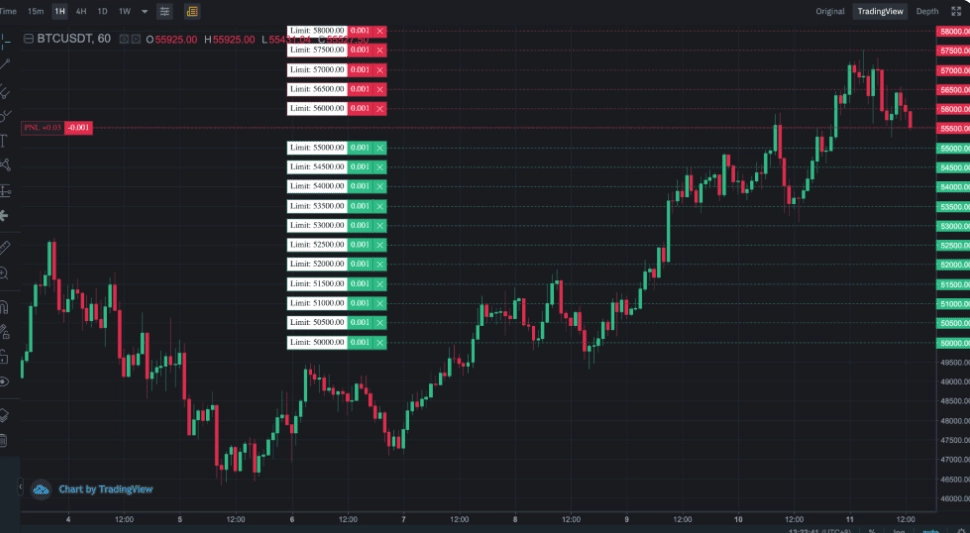
A concrete grid. Ethereum slides from $2,000. Cryptohopper buys at $1,950 and sells at $1,980, buys again at $1,900 and sells at $1,930. Each mini-cycle banks a small gain while long-only holders wait for a recovery that may not come. The Strategy Designer tunes the grid with 130+ indicators, and the AI trading layer adapts parameters as conditions shift.
- Where it works: sideways or mildly bearish markets with regular dead-cat bounces.
- Where it fails: a straight crash with no bounces compresses returns; a stop below the grid's lower bound caps that scenario.
- What it needs: one of the 14 to 18 supported exchanges. Paper trading on live data lets you prove the grid before real capital goes in.
Copy trading wallets that still win in a bear market
Some wallets stay green when everything is red; copy trading lets you mirror them. They buy, you buy. They exit, you exit.
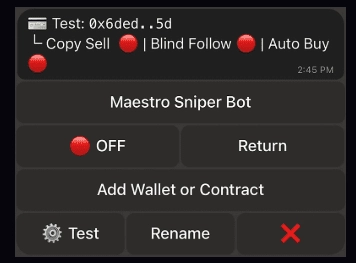
Maestro does it on-chain across 15 blockchains, on DEXes such as Uniswap, Raydium, PancakeSwap and Pump.fun, so you follow traders making money on memecoins and new tokens, not futures positions on an exchange.
Paste a wallet, set size and risk, and Maestro mirrors each trade in real time: 3 wallets on the standard plan, 12 per chain on Premium. Track Only lets you watch a wallet before funding anything.
How to pick wallets worth copying:
- A win rate above 60% over many trades and several tokens, not one hot streak.
- No signs of wash trading or coordinated pumps.
- Still profitable in the current downtrend: that's the filter a bear market gives you for free. DEXScreener and Birdeye rank top traders by PnL; our DexScreener workflow covers the token side.
Maestro charges 1% per trade with up to 30% cashback by volume through /cashback, and adds patented Anti-Rug, Limit Orders 2.0 and the Positions Ledger on top.
Risk limits before you turn on a bear market bot
Pick the tool for the strategy, then set risk before the first trade.
- Match tool to strategy. Short selling on a CEX: 3Commas. Grid trading on bounces: Cryptohopper. On-chain copy trading: Maestro. You can run two at once if you hold capital both on an exchange and in a self-custody wallet.
- Connect safely. CEX bots connect with an API key that can trade but not withdraw; funds never leave the exchange. Maestro uses a self-custody wallet inside Telegram with AES-encrypted keys.
- Size small. Never risk more than 1% to 5% of capital on a single position. Set stop-losses and a maximum exposure per strategy before activating.
- Budget per strategy. Copy trading can be tested with $50 or less; a grid or short needs around $500 to set meaningful levels without the first bounce hitting your stop.
- Test, then leave it alone. Paper trade the grid, watch a wallet in Track Only, then go live and resist intervening on every move: removing emotion is the whole point.
None of these tools needs code, and none removes risk. For the background on bear cycles, see Binance Academy, Coinbase Learn and Arkham's research on bear-market strategies.