
How PolyGun works on Polymarket
PolyGun is a Telegram bot for trading Polymarket: it places orders, mirrors wallets you choose and tracks your portfolio without leaving the chat. We rate it 4.7 out of 5.

It is an official Polymarket Builders Program partner and runs on Polygon. The browser, the MetaMask pop-ups and the gas fees disappear: a non-custodial smart wallet is created when you open the bot, and you hold its keys.
What sets it apart came in March 2026, when PolyGun bought Polymarket Analytics. That brought data on about 2.3 million traders, more than 183,000 markets and over 120 million positions, across Polymarket and Kalshi. Be precise about the scope: PolyGun executes on Polymarket only. The Kalshi data feeds wallet and market analytics; you can't trade Kalshi through the bot.
A PolyGun trade, start to finish
PolyGun removes everything between deciding and executing; the decision is still yours. Take a Fed rate decision due at 2:00 PM, with a Polymarket market on cut, hold or hike.
Fifteen minutes out, you open PolyGun, paste the market link and check order book depth in the chat. No extra tab, no wallet pop-up. You size the entry, submit, and the trade lands without a gas prompt.
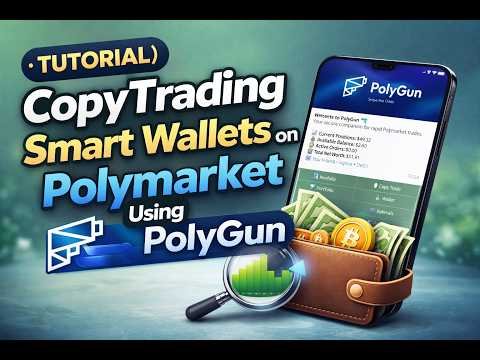
With copy trading the sequence changes. A wallet you follow, one that has historically entered rate-decision markets 20 to 40 minutes before consensus forms, opens a position, and PolyGun mirrors it at your set size. You don't need to be watching at 2:00 PM; the trade is done before you check your phone.
Where it can go wrong is thin markets. A niche macro market with $40,000 of total liquidity behaves nothing like the flagship Fed market: same bot, same speed, but slippage on a thin book can eat the edge. Check depth before entering; the bot won't do it for you.
PolyGun features inside the Telegram bot
PolyGun's tools fall into three stages: before you trade, while you hold, and after you exit.
Before you trade
- Smart wallet discovery: a leaderboard of wallets filtered by win rate, PNL and volume, from the Polymarket Analytics data.
- Multi-chain deposits: auto-bridging into USDC from Polygon, Solana, Ethereum or BNB Chain.
- Prediction Desk news channel: a Telegram channel for market-moving events, aimed at catching news before it reprices the odds.
- AMMO points: rewards for trading volume, daily streaks and referrals.
While you hold
- Instant trading: market buys and sells inside Telegram.
- Limit orders: a target price that executes on its own.
- Quickbuy presets: one-tap entries at preset amounts when seconds move the price.
- AutoPilot: rules for arbitrage, hedges, market-close plays and up/down strategies on BTC, ETH, SOL and XRP, set once.
After you exit
- Portfolio: open and closed positions, daily PNL and exposure per market in one view.
- CopyTrade PNL: daily and all-time PNL from your own returns on followed trades, not the copied trader's.
- TP and SL: set on manual trades from the Portfolio page, or in advance for copied positions.
- PNL cards: shareable performance images.
Fees stay flat: 1% per transaction, no subscription, no token to buy, no tiers. The minimum deposit is $1 USDC, and Settings offers ten languages, including English, Spanish, Portuguese, Arabic and both Chinese scripts.
Does copy trading work on Polymarket?
It helps with the most common reason Polymarket traders lose: bad timing rather than bad predictions. Entering after the price has moved, trading illiquid markets with heavy slippage, buying because everyone else is; copying a disciplined wallet sidesteps those.

For each tracked wallet PolyGun shows win rate, entry timing against price momentum, category breakdown and volume history. You can see whether a wallet enters early or chases, where it's strong, and whether that held over months or one hot week.
The wallets worth copying tend to share a profile:
- liquid political or macro markets;
- fewer, high-conviction bets rather than dozens of micro-positions;
- sensible sizing, never all-in;
- entries on a real price imbalance, not after the crowd.
The thin-market caveat applies here too: a copied entry into a shallow book fills worse than the wallet's own. And PolyGun is Polymarket only; if you trade tokens or Kalshi directly, it has no role in that workflow. For a live ranking of wallets, see our Polymarket smart wallet leaderboard.
PolyGun analytics behind our rating
Most copy-trading bots add a leaderboard to their execution engine; PolyGun bought the leaderboard company, and that data is why it scores 4.7.

- Win rate over time: one winning trade says nothing; a steady rate across dozens of markets says something.
- Entry timing: whether a wallet enters early, late or neutral against price momentum, the most useful signal for choosing who to copy.
- Category breakdown: a trader who wins on US politics may have no edge on sports or crypto.
- Volume alerts: flags sharp money flows into a market so you catch momentum before it fully reprices.
About 2.3 million traders and over 120 million positions across Polymarket and Kalshi is not something a Telegram bot builds in a few months. It's acquired infrastructure, and it matters if you believe timing on information is part of what wins on prediction markets. See our scoring method.
PolyGun or trading on Polymarket directly
The real comparison isn't another bot, it's Polymarket's own site.
| What matters | Polymarket (native) | PolyGun |
|---|---|---|
| Execution | Browser, wallet connect, confirm each trade | One Telegram message, wallet built in |
| Gas | You pay it | Sponsored, $0 to you |
| Copy trading | Not available | 1:1 mirroring, filtered by wallet analytics |
| Wallet analytics | Basic public position history | Entry timing and category breakdowns |
| Market discovery | Full browsing with deep category filters | Topic search or pasted link, less browsing depth |
The native site wins on discovery: if you like browsing categories for markets you hadn't considered, Polymarket does that better. PolyGun is for when you know what you want to trade, or want a followed wallet to find it for you.
How to set up PolyGun, in brief
Five steps from Telegram to a first copied position; our Polymarket copy trading tutorial walks through each screen.

- Open PolyGun in Telegram. The bot creates a wallet in a few taps; export the private key and store it safely.
- Fund it with USDC, from $1 to test, bridged automatically from Polygon, Solana, Ethereum or BNB Chain.
- Find a market by topic or pasted link, and check liquidity and odds before entering.
- Set up copy trading if you want it: filter wallets by win rate, entry timing and category, then set your size.
- Trade and track with market or limit orders, quickbuy presets and the portfolio view.
PolyGun strengths and weak spots
PolyGun fits traders already active on Polymarket who are tired of execution friction, especially on news-driven markets where seconds count. Copy trading helps newer traders learn from disciplined wallets, and the analytics make wallet choice something you can check rather than whoever tops a leaderboard this week.
It's the wrong tool for crypto tokens, Kalshi trading or one bot across several prediction platforms. And no tool replaces judgment on sizing and variance: it amplifies a good strategy, it doesn't supply one.
Strengths and limits
Strengths
- Zero gas on Polygon transactions
- Copy trading backed by data on about 2.3 million traders
- Deposits from Solana, Ethereum, BNB Chain and Polygon
- Official Polymarket Builders Program partner
Limits
- Polymarket only, no Kalshi or token trading
- Weaker market discovery than Polymarket's own site

PolyGun fees, deposits and Kalshi data
What does PolyGun cost, and what's the minimum deposit?
A flat 1% per transaction, no subscription and no token to hold; Polygon gas is sponsored. The minimum deposit is $1 USDC, bridged automatically from Polygon, Solana, Ethereum or BNB Chain. Funds sit in a smart wallet with an exportable key, and the bot never pools them; never share credentials, even with someone claiming to be PolyGun support.
Can I trade Kalshi with PolyGun?
No. The Polymarket Analytics database PolyGun bought covers wallets on both Polymarket and Kalshi, but the bot executes trades on Polymarket only. For Kalshi, see our guide to Kalshi copy trading with Kreo.