
AI now drives the majority of global trading volume. Most content about AI trading strategies is either pure hype or built on paper results that never held up with real money. This article covers 5 approaches that were each tested with $100 in live conditions in 2026, with honest results, a specific tool for each, and a clear answer on when each one actually works.
Key Takeaways
- Grid bots on Pionex returned +11.8% in 3 weeks with zero screen time.
- Sentiment NLP (FinBERT) works on event days only, not as a daily system.
- Prediction market arbitrage has real upside but demands deep preparation.
- Matching strategy to market conditions matters more than the tool itself.
🤖 Strategy 1: Make Money While the Market Goes Sideways (Grid Bot)

Most traders hate sideways markets. Grid bots love them. The bot places a ladder of buy and sell orders above and below the current price. Every time price bounces within the range, it quietly captures the spread. No direction needed. No prediction needed.
The AI layer makes this smarter by adjusting the grid spacing automatically based on current volatility. You are not stuck with fixed levels that stop making sense when conditions shift. The bot recalibrates so your range stays relevant.
The tool: Pionex FREE
Pionex is an exchange with grid bots built directly inside it. No API keys to copy-paste, no external tools to connect. The AI Grid Bot calculates the optimal range and spacing based on historical price behavior. Free to use; they earn on trading fees instead of charging subscriptions.
How to Start with a Grid Bot
Sign up on Pionex
Create a free account at Pionex and navigate to the AI Grid Bot in the bots section.
Pick a high-volume pair
BTC/USDT or ETH/USDT are the most stable for grid trading. High volume means tighter spreads and smoother grid execution.
Review the AI’s suggested range
The bot suggests the grid spacing and range automatically. Tweak the lower boundary if it looks too wide or sits below visible support.
Set a stop-loss at the bottom of the range
This protects against a hard breakdown. Without it, a strong downtrend will lock funds in losing buy orders.
Check back every few days
If price breaks cleanly out of range, pause the bot manually. The grid strategy only profits inside a defined range.
Fully passive, runs 24/7 with zero screen time. No directional prediction needed: profits from price oscillation regardless of which way the market leans. Free to set up, no coding required.
Strong trends in either direction will generate losses. Small profits per cycle that compound over weeks, not overnight. You need to pause the bot manually when market conditions change.
🧪 Tested with $100: Pionex Grid Bot
Deposited $100 into Pionex on a Monday. Set up the AI Grid Bot on BTC/USDT, let the AI suggest the range and spacing, then tweaked the lower boundary slightly to sit above a visible support level. Left it running without touching it.
By end of week 1: +$4.20 in captured grid profits. Nothing exciting. But the bot ran 24/7 through a weekend dip and 2 small pumps, capturing both without any manual action. By end of week 3: +$11.80 total with zero manual trades. The market stayed range-bound. That was the key factor. When Bitcoin broke out of range on day 22, the bot was paused manually as planned.
Verdict: Works exactly as advertised in sideways conditions. $100 turned into $111.80 in 3 weeks, zero screen time.
- 🔗 Pionex: official exchange with built-in grid bots, free to use.
- 📖 Pionex help center and docs: setup guides and bot documentation.

🧠 Strategy 2: Let AI Read the News For You (Sentiment Trading)
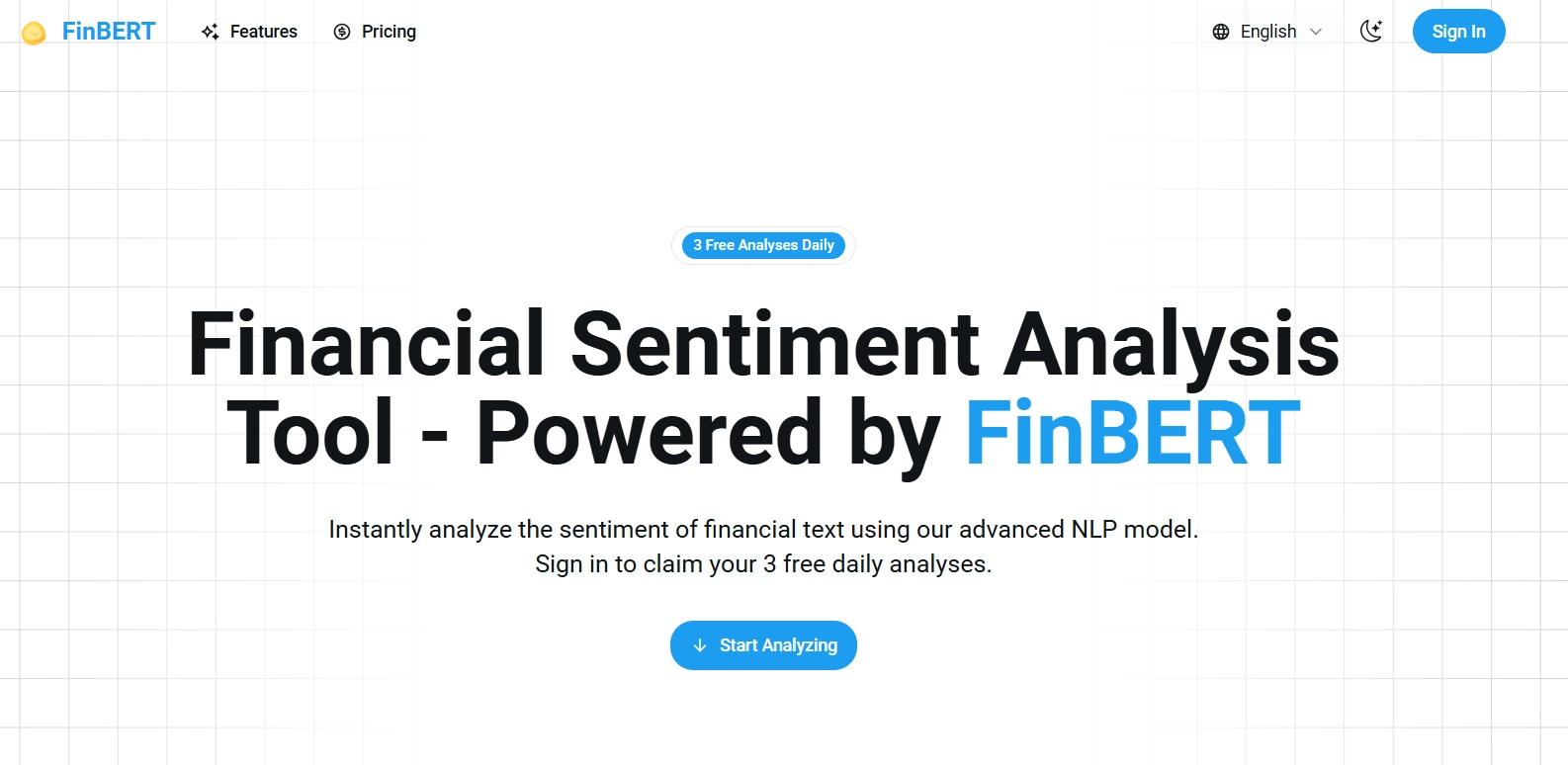
The idea is simple: AI scans thousands of news headlines, tweets, and earnings calls in real time, decides if the mood is bullish or bearish, and alerts you before the crowd catches up. By the time you finish reading an article, the model has already scored it and moved.
You combine that sentiment signal with a basic price confirmation on your chart. One without the other is noise. Together, they form a clean entry trigger on high-impact days.
The tool: FinBERT + TradingView FREE
FinBERT is a free open-source AI model trained specifically on financial language. It reads text and outputs a score: Positive, Negative, or Neutral. TradingView handles the chart confirmation side. Requires basic Python to connect a news feed to FinBERT.
- 🔗 FinBERT on Hugging Face: ready to run, no local setup needed.
- 💻 FinBERT GitHub: full source code and integration examples.
- 📈 TradingView: chart alerts and price confirmation layer.
- 📰 Alpaca News API: free news feed to pipe into FinBERT.
Sharp edge on high-impact event days like earnings, CPI, and NFP. The model processes headlines faster than any human and removes emotional overreaction. Free end-to-end with open-source tools.
Signal-to-noise ratio collapses on quiet sessions. Basic Python knowledge required to connect the news feed. AI can misread sarcasm, unusual phrasing, or context-heavy headlines.
🧪 Tested with $100: Sentiment NLP Trading
Ran 2 tests with the same $100. Test 1 (earnings day, NVDA): FinBERT flagged a strong Positive score (0.91) on the earnings headline 40 seconds after release. TradingView alert triggered as price broke pre-market resistance. Entered long, took profit at +3.2%. +$3.20.
Test 2 (random Tuesday): Tried the same setup on a slow news day. FinBERT returned a vague Neutral-Positive score on a Fed commentary headline. Entered a position. Nothing moved. Got stopped out for -1.8%. The second test was a user error: the setup was used outside its ideal conditions.
Verdict: Strong on event days, loses its edge fast on quiet sessions. Respect the conditions or do not trade it.
If you want automated trading without building your own sentiment pipeline, PolyGun on Telegram lets you copy proven prediction market wallets with no code and a $1 minimum deposit.
📅 Strategy 3: Trade the Big News Events on Autopilot (Event Breakout)
Every month there are scheduled events that move markets hard: central bank decisions, inflation data, jobs numbers. Everyone knows they are coming. The edge is not in predicting the number. It is in having a plan ready and executing it faster than a human can react.
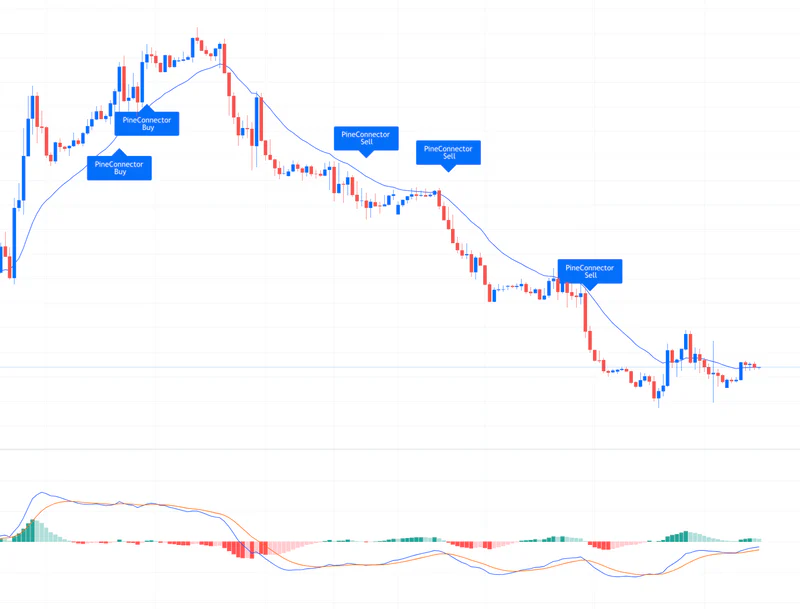
The setup: TradingView + PineConnector. TradingView spots the breakout. PineConnector connects it to your MT4/MT5 broker via webhook and sends the order in milliseconds. The whole thing runs without touching a button. REQUIRES PRO PLAN
- 📈 TradingView: alerts, charting, and breakout detection. Pro plan required for webhooks.
- 📖 TradingView webhook docs: how to set up automated alert delivery.
- 🔗 PineConnector: bridges TradingView alerts to MT4/MT5 execution.
- 📖 PineConnector docs: full setup guide and command reference.
The key rules: pre-mark the price range of the 15 minutes leading up to the event, set a breakout alert for a close above the high or below the low, pre-set your stop-loss and take-profit in PineConnector, and always add a time stop. If nothing moves within 15 minutes of entry, exit automatically.
Works across forex, indices, crypto, and stocks on any scheduled release. Once configured, fully automated with no screen time needed during the event. Consistent monthly opportunities on the macro calendar.
Fakeouts are common: price spikes one direction then sharply reverses. Spreads and slippage spike during high-volatility releases. TradingView Pro plan required to use webhooks.
🧪 Tested with $100: Event Breakout
Set aside $100 to trade 2 NFP releases. Release 1: The number came in hotter than expected. Price spiked up, the breakout alert fired, PineConnector sent the order, then price reversed hard within 90 seconds. Classic fakeout. Stop hit. -$4.50.
Release 2: A wider stop based on ATR. Price broke down, held the move, hit the take profit. +$7.20. Net across both: +$2.70. The time stop saved from a worse loss on release 1. Without it, there would have been more bleeding on the reversal.
Verdict: Works but demands strict rules. The automation is excellent. The market does not care about your plan.
📈 Strategy 4: Follow the Trend Without Babysitting It (AI Trend-Following)
Classic trend-following bots have one big problem: they keep trading when there is no trend. A sideways market chews them up. AI-enhanced versions solve this by detecting when momentum is fading and simply pausing, which sounds small but makes an enormous difference in real results.
Tickeron publishes pre-built AI trading robots with fully audited live performance stats: win rate, annual return, max drawdown. They added 5-minute and 15-minute intraday agents in 2025. You pick a robot, subscribe to its signals, and either follow manually or connect to auto-execute.
- 🔗 Tickeron: platform home with all AI robot products.
- 🤖 AI Robot marketplace: browse, filter by Sharpe ratio, and review live track records.
- 📖 How Tickeron robots work: methodology and signal delivery explained.
Before selecting any robot, sort by Sharpe ratio rather than total return. This filters out lucky short-run performers from robots with consistent risk-adjusted performance. Check at least 6 months of live performance, not just backtests. If you want to understand how copy trading in prediction markets compares, the Polymarket copy trading tutorial covers a different but complementary approach.
Very low effort once set up: subscribe, follow signals, done. Audited public track records mean you can verify real live performance before spending a dollar. Adapts automatically when momentum fades.
Drawdown periods are real and emotionally difficult to hold through. Past performance reflects past market conditions: a robot that thrived in 2024 trends may underperform in a choppy 2026 regime.
🧪 Tested with $100: Tickeron AI Robot
Picked a robot with a 6-month verified track record on US equities. Subscribed, allocated $100, followed signals manually for 3 weeks. Week 1: 2 signals, both winners. +$6.40. Week 2: 3 signals, 2 losses, 1 small win. -$8.10 net for the week.
The near-exit point came right there. Then the robot’s public history was checked: it had gone through an almost identical 2-week drawdown 3 months earlier before recovering to new highs. Week 3: +$9.30. Ended the month at +$7.60 total.
Verdict: The robot works but you need to trust the track record during the ugly stretches. Most people quit right before things turn around.
🦞 Strategy 5: Use AI to Spot Mispriced Bets (Prediction Market Arbitrage)
Prediction markets like Polymarket let people bet on real-world events using yes/no contracts. Sometimes these contracts get mispriced. AI agents can scan hundreds simultaneously, cross-reference real data like news, weather, and sports injury reports, and spot where the market is wrong before anyone else catches it.
Between April 2024 and April 2025, AI bots generated an estimated $40 million in arbitrage profits on Polymarket alone. One well-documented bot turned $50 into $2,980 in 48 hours by scanning markets every 10 minutes and capping each position at 6% of total capital. The window is closing fast as competition grows.
There are 2 ways to approach this depending on your technical level.
Option A: Build Your Own Agent (OpenClaw)
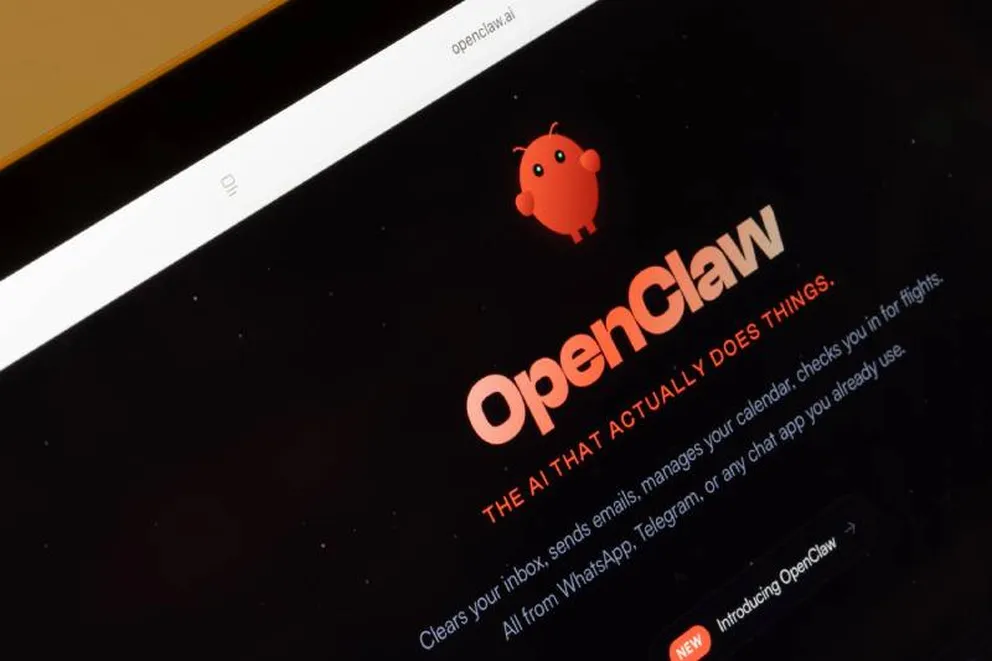
OpenClaw is a free, open-source AI agent that runs locally on your machine and connects to platforms like Telegram and Discord. It integrates with AI models and can execute real-world tasks autonomously. The Polyclaw skill connects it directly to Polymarket’s order book. This is the advanced route: more control, more complexity, more things that can go wrong. Security risks are real: malicious skills have stolen funds from users. Always run ClawSecure before adding any skill, and use a fresh wallet with only what you can afford to lose.
- 💻 OpenClaw on GitHub: source code, install instructions, and skill marketplace.
- 🔗 Polymarket: official prediction market platform.
- 🤖 PolyGun: beginner-friendly Telegram copy trading for Polymarket, no setup required.
Option B: Copy Proven Wallets (PolyGun) RECOMMENDED
PolyGun OFFICIAL PARTNER is a Telegram bot built specifically for Polymarket that lets you pick a wallet, set your size, and mirror every entry automatically. Win rate, entry timing, and category breakdown are all visible before you commit to copying anyone. It creates a secure non-custodial wallet automatically, sponsors all Polygon gas fees, and executes trades directly inside Telegram. Minimum deposit is $1 USDC.
Deposits work from Polygon, Ethereum, Solana, or BNB Chain, auto-bridged to USDC. For a full breakdown of features and how copy trading works, the PolyGun review covers it in detail.
Mirror profitable wallets automatically at 1:1 ratios with full PnL stats before you follow anyone.
PolyGun sponsors all Polygon gas; you only pay the 1% trading fee per transaction.
Auto-bridge from Polygon, Ethereum, Solana, or BNB Chain into USDC. Minimum $1.
Access data from 2.3M+ traders and 183K+ markets via the March 2026 analytics acquisition.
Documented at scale: $40M in AI-driven arbitrage profits on Polymarket in 12 months. PolyGun removes every technical barrier: no code, no setup, works entirely inside Telegram with a $1 minimum.
Arbitrage windows are compressing fast: under 3 seconds in some markets as bot competition grows. OpenClaw carries real security risks. Copying wallets does not guarantee their future performance matches their past.
🧪 Tested with $100: OpenClaw + Polymarket
Set up OpenClaw on a spare laptop, created a fresh wallet, loaded $100 USDC. Added Polyclaw after scanning it. Ran in monitor mode for a week. Enabled execution with a 5% cap per trade. Days 1-10: 2 small wins, 1 small loss. Net +$3.80.
Then: a YES contract was resolved as NO on a technicality that had not been read carefully. Lost the full $6 position. A market that was being monitored moved too fast: the bot executed at terrible slippage. -$11.20 in 2 days. Finished the test at $92.60, down $7.40.
The bot was not broken. The contracts had not been studied carefully enough before trading with real money, and the events targeted had gotten too competitive. Starting with PolyGun’s copy trading to learn the market first would have been the smarter entry point.
Verdict: Real potential, real learning curve. Do not skip the monitor-only phase. Read every contract’s resolution rules before risking a cent.
💵 $100 Challenge: Final Scoreboard
Each automated trading strategy below was run with exactly $100 in live conditions. No paper trading. No cherry-picked timeframes.
✅ +11.8% in 3 weeks. Zero screen time. Best performer of the group.
⚠️ +1.4% total. Works on high-impact event days only. Poor signal outside those conditions.
⚠️ +2.7% across 2 NFP releases. One fakeout, one clean winner. Time stop essential.
✅ +7.6% across 3 weeks. Profitable, but required holding through a painful drawdown week.
❌ -7.4%. Underestimated contract complexity and market competitiveness. Monitor-only phase skipped too early.
The boring one won. Grid trading on Pionex required zero skill, zero screen time, and came out on top. The more exciting strategies either needed more experience to execute properly or ran into conditions that worked against the setup.
Knowing when your strategy works is more valuable than the strategy itself. An AI trading bot is only as good as the conditions you deploy it in.
Frequently Asked Questions
Yes, but not automatically and not for everyone. The strategies above all have documented results, but every one of them lost money at some point during testing. AI removes emotion and executes faster than a human, but it cannot predict the market. The edge comes from matching the right strategy to the right conditions.
A grid bot on Pionex. No coding, no broker API, no external tools. You deposit, configure the bot in a few clicks, and let it run. It will not make you rich fast, but it is the most beginner-friendly setup with a real and verifiable track record.
Yes, in most jurisdictions. Automated and algorithmic trading is legal for retail traders. The exception is prediction markets like Polymarket, which restrict users in certain countries. Always check local regulations before trading.
PolyGun is a Telegram bot for Polymarket that lets you copy proven wallets without any technical setup. OpenClaw is a full AI agent framework you install and configure yourself. PolyGun takes 5 minutes to start with a $1 minimum. OpenClaw gives you more control but carries real security risks and requires technical knowledge.
In the right conditions, yes. FinBERT works well around scheduled high-impact events where clear news creates a directional bias. Outside those conditions, the signal-to-noise ratio drops fast. Treat it as a filter that sharpens your edge on good days, not a system to run every day.
Practically speaking, $50 to $100 is enough to test most setups here. Pionex has no meaningful minimum beyond a small deposit to trade. PolyGun starts at $1 USDC. Start small, verify the strategy works for you personally, then scale up once it does.
Resources